

“It’s just a small dent — can’t it wait?” Sometimes, yes. Other times, waiting is exactly how a five-minute repair turns into a multi-hundred-dollar body job. The deciding factor isn’t the size of the dent — it’s whether the paint is still sealed.
Do dents actually cause rust?
A dent on its own does not cause rust. Your car’s steel is protected by primer, color, and clear coat. As long as that paint layer is unbroken, the metal underneath is sealed from air and water — dented or not. Rust starts when the paint cracks or chips down to bare metal.
How a dent turns into rust
Here’s the chain reaction:
- The impact cracks or chips the paint, exposing bare steel.
- Moisture — rain, dew, humidity — settles into the low spot of the dent and sits there.
- Exposed iron + water + oxygen = oxidation (surface rust).
- Left alone, surface rust spreads under the surrounding paint, lifting it and turning a dime-sized chip into a panel problem.
Which dents are urgent — and which can wait
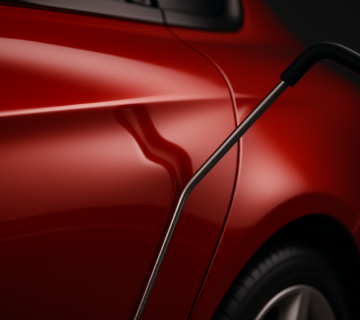
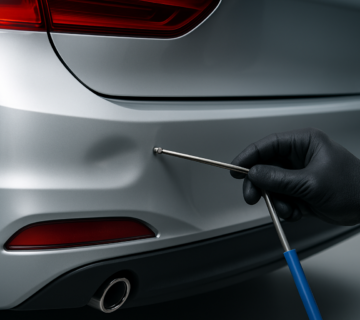
Can usually wait: smooth dents and door dings where the paint is still glossy and unbroken. These are textbook paintless dent repair candidates — the longer-term risk is low.
Handle promptly: any dent with a visible paint crack, chip, scratch to bare metal, or a sharp crease. Hail damage falls here too, because hail often chips paint across many spots at once — see our hail damage guide.
The Sacramento climate factor
Sacramento’s dry summers slow rust down — but our damp, foggy winters and weeks of valley rain are perfect rust weather, and any winter trip to Tahoe means road salt and brine, which accelerate corrosion dramatically. A chipped dent that would sit harmlessly in July can bloom into rust by February.
The real cost of waiting
This is the part that surprises people. A clean dent with intact paint is one of the cheapest repairs there is — see the Sacramento pricing guide. But once rust starts, paintless repair is off the table: now it’s grinding, filler, primer, base, and clear — the exact body-shop process PDR is designed to avoid. Fixing early keeps it cheap and protects resale value.
How to tell if your dent broke the paint
Run a fingernail lightly across the dent. If it catches on a crack or edge, or you see a dull grey/brown spot, the paint is likely broken — don’t wait. If it glides over smooth, glossy paint, you have time, but it’s still worth a quick look. Not sure? Text a photo and we’ll tell you honestly whether it’s urgent.
Dent & rust FAQs
Will a small dent rust?
Only if the paint is cracked or chipped to bare metal. Sealed paint = no rust. Broken paint = rust can start within weeks.
How long before a dent rusts?
Once bare metal is exposed, surface rust can appear in a few weeks in Sacramento’s wet season — faster with road salt.
Does fixing a dent early save money?
Yes. A clean dent is a quick paintless repair; a rusted one becomes full body work that costs far more.


No comment