Why Aluminum Panels Are Different
Aluminum is everywhere in modern vehicles. Tesla builds entire bodies from it. Ford switched the F-150 to aluminum in 2015. Rivian, Audi, BMW, Mercedes, Jaguar, and Land Rover all use aluminum extensively. The material is lighter than steel, resists corrosion, and improves fuel efficiency — but it behaves very differently when dented.
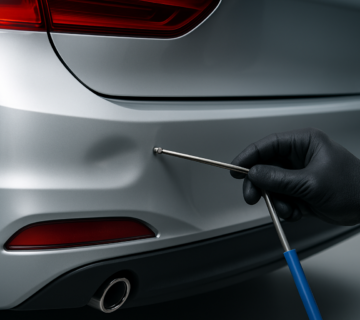
The short answer: yes, paintless dent repair works on aluminum panels — but it requires specialized training, different tools, and a technician who understands aluminum’s unique properties. At Glass Reflections Dent Removal, we’ve invested in the tools and certification specifically for aluminum PDR across the Sacramento area.
How Aluminum Behaves Differently Than Steel
Steel has what metallurgists call “elastic memory” — push it out of shape, and it wants to spring back. That’s why steel PDR is relatively straightforward for trained technicians. Aluminum is different in several important ways:
- Less elastic memory — aluminum doesn’t bounce back as readily. It deforms more permanently, requiring more precise manipulation.
- Work-hardening — every time aluminum is stressed, it gets harder and more brittle at that point. Over-working a dent can crack the panel.
- Heat sensitivity — aluminum responds to heat differently. Some aluminum PDR techniques use controlled heat to reduce work-hardening, but too much heat weakens the panel.
- Thinner gauge — aluminum panels are typically thinner than steel equivalents, demanding a lighter touch and finer tools.
PDR on Tesla Vehicles
Tesla owners are among our most frequent callers for aluminum dent repair in Sacramento. All Tesla models — Model 3, Model Y, Model S, Model X, and Cybertruck — use aluminum body panels to varying degrees.
Tesla’s aluminum panels are particularly well-suited to PDR because:
- Tesla paint is expensive to match — avoiding repaint saves significant cost
- Body shop repair voids the panel warranty — PDR doesn’t alter the panel structure
- Tesla resale values are sensitive to body work history — PDR leaves no trace on vehicle reports
- Door dings are extremely common — the wide doors on Model X and Model S attract parking lot damage
PDR on Ford F-150 and Other Aluminum Trucks
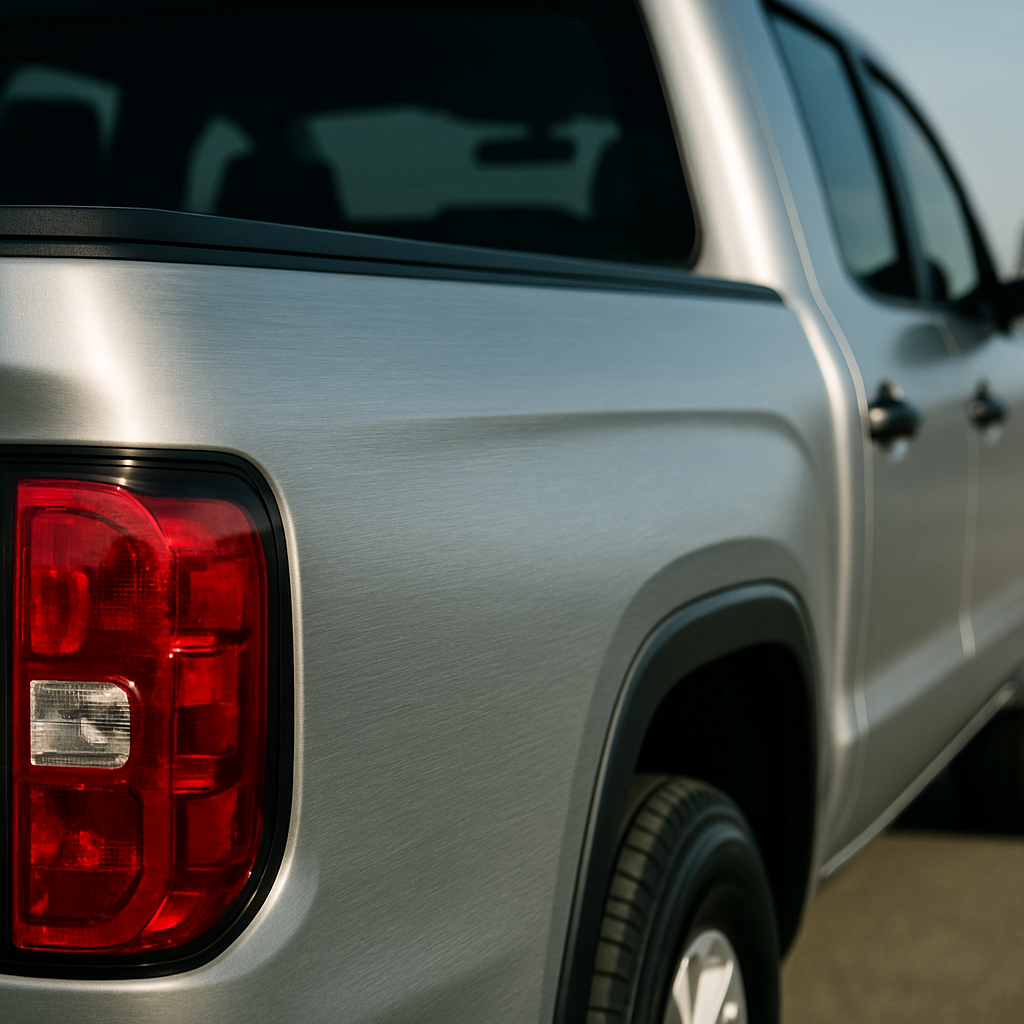
Since Ford switched the F-150 to an aluminum body in 2015, we’ve seen a steady increase in aluminum PDR requests from truck owners. The F-150’s aluminum panels are thicker than Tesla’s, which actually makes certain dents easier to repair — though hail damage on trucks can be more complex due to the larger panel surfaces.
Other aluminum-bodied trucks and SUVs we regularly service include the Rivian R1T and R1S, Ford Super Duty (certain panels), Chevrolet Silverado EV, GMC Hummer EV, and various luxury SUVs.
When Aluminum PDR Won’t Work
Aluminum PDR has limits, and being honest about those limits is part of our job:
- Cracked paint over the dent — if the impact cracked or chipped the paint, the panel needs conventional repair
- Sharp creases at body-line intersections — work-hardened aluminum at crease points can be too brittle for PDR
- Previously repaired panels — panels with body filler from prior repairs can’t safely receive PDR work
- Stretched metal — severe impacts that stretched the aluminum beyond its elastic limit need replacement, not repair
We assess every aluminum vehicle honestly and will tell you upfront whether PDR can deliver a perfect result or if conventional repair is the better path.
The Cost Advantage of Aluminum PDR
Conventional aluminum body repair is notoriously expensive. Body shops charge premium rates for aluminum work because it requires separate tools, dedicated work areas (to prevent galvanic corrosion from steel dust), and specialized training. A single aluminum panel repaint at a body shop can run $1,500 to $3,000+.
PDR on the same minor dent typically costs $150 to $400, preserves the factory paint, and takes 1-3 hours instead of days. For a deeper look at pricing, check our complete Sacramento PDR pricing guide.
What to Look for in an Aluminum PDR Technician
Not all PDR technicians are equipped for aluminum. When choosing a provider for your Tesla, F-150, or other aluminum-bodied vehicle, ask about:
- Specific aluminum training and certification — general PDR training doesn’t cover aluminum’s unique properties
- Aluminum-specific tool sets — aluminum requires different tip shapes and rod designs than steel PDR
- Experience with your specific vehicle make — Tesla panels behave differently than F-150 panels
- Willingness to say no — a good tech will decline a job rather than risk damaging your panel
Get a Free Aluminum PDR Estimate
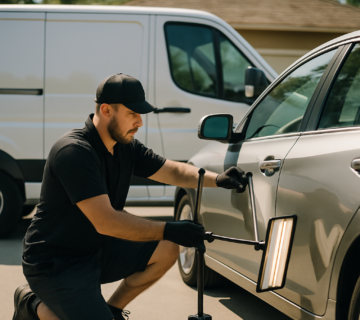
Glass Reflections provides same-day mobile dent repair for aluminum vehicles across Sacramento, Roseville, Folsom, Elk Grove, and surrounding communities. We come to you with the specialized tools your vehicle requires.
Call or text Alex at (916) 585-2554 for a free estimate. Send a photo of your dent and we’ll give you an honest assessment of whether PDR is the right approach for your aluminum panels.
Wondering how PDR compares to a body shop overall? Read our PDR vs body shop comparison guide.

No comment