
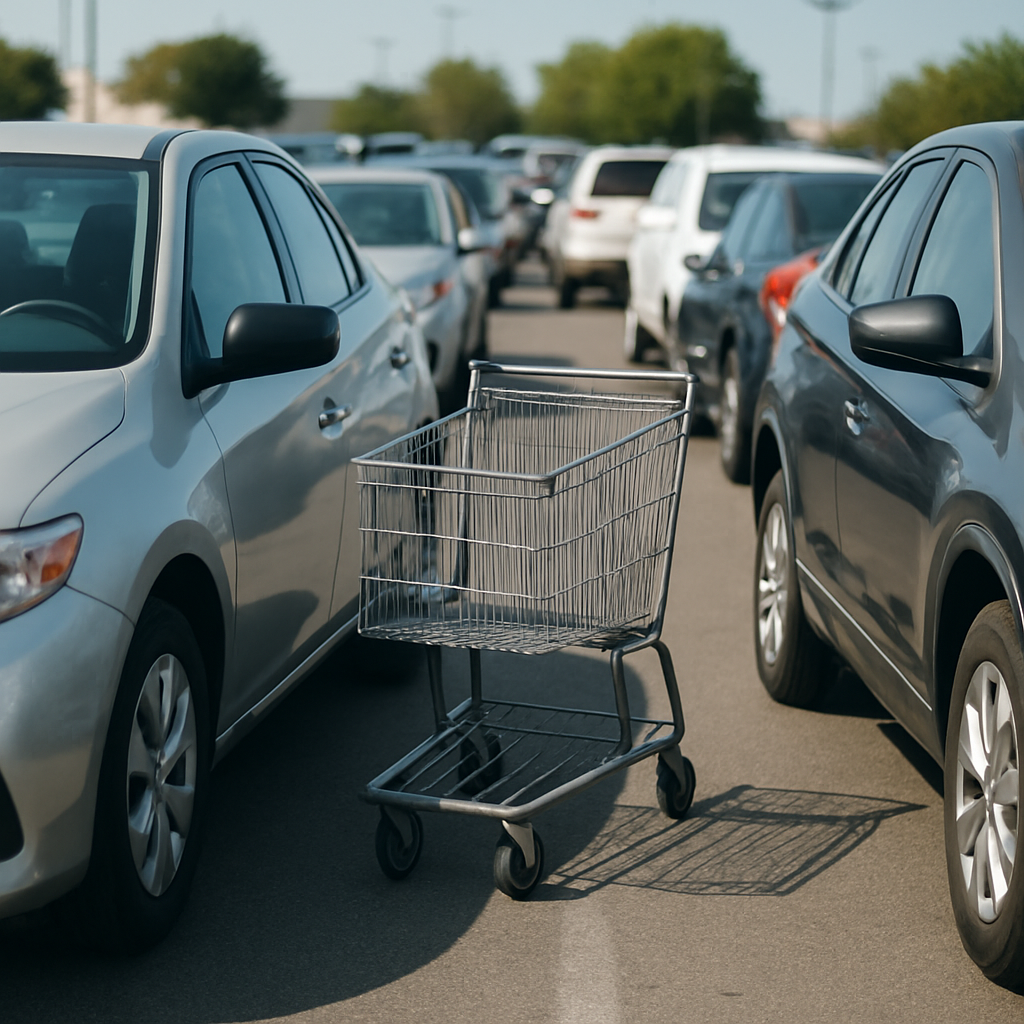
Door dings are the single most common repair we do. The good news: most are preventable with a few habits and a couple of cheap accessories. Here are nine tactics that actually reduce your odds — and a couple that aren’t worth the money.
Where you park matters most
1. Park at the far end of the lot
The emptiest part of any lot is the back. Fewer neighboring cars means fewer swinging doors. The 60-second walk is cheaper than a door ding repair.
2. Park next to the cart corral — on the non-cart side
A cart corral means no car parks on that side. Park so the corral is on your most-exposed door. (Just not on the side carts get pushed into.)
3. Choose an end spot
End-of-row spots only have a neighbor on one side, halving your exposure. Pull-through end spots are even better — no one on either side.
4. Park next to “nice” cars, avoid beat-up ones
A car covered in existing dings tells you the owner doesn’t care about door control. A clean, well-kept car next to you is a safer neighbor. Avoid parking next to big trucks and vans with heavy doors.
5. Straddle nothing, center everything
Park centered in your space so both your doors and your neighbors’ doors have maximum clearance. Crowding one line forces the adjacent door to open into your panel.
Gear that actually helps
6. Door edge guards (the best $10–$20 you’ll spend)
Stick-on or clip-on edge guards protect your door’s edge — which means you won’t ding the car next to you, and you won’t get a chip when your own door taps a pole. They’re nearly invisible on most cars.
7. Door cup protectors / magnetic side guards
Magnetic or hanging side panels sit on your door at the height other doors swing into. Useful if you regularly park in tight lots. Removable so they don’t affect your paint long-term.
Habits that cost nothing
8. Hold your own door
Most dings happen because of careless door control — including your own passengers. A quick “hold the door” habit, especially with kids and on windy days, prevents you from being the one causing dings (which protects you from liability too).
9. Mind the wind
On gusty Sacramento days, wind catches doors and slams them into the next car. Open doors deliberately and hold them when it’s blowing.
What’s NOT worth the money
- Full car covers for ding protection: they don’t stop door impacts and can scratch paint when they flap. Use covers for sun/weather, not dings.
- Expensive “nano-ceramic dent resistance” coatings: ceramic coatings protect paint from scratches and UV, not from physical dents. Don’t buy them for ding prevention.
- Parking sensors for dings: they help you avoid hitting things, not other people’s doors hitting you.
When a ding happens anyway
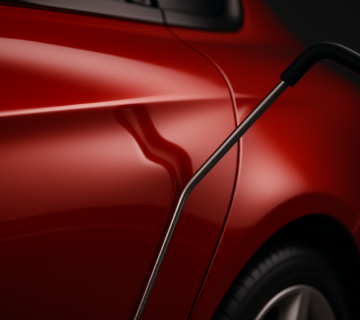
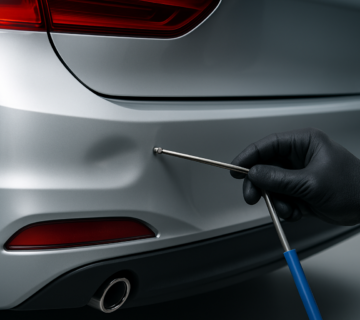
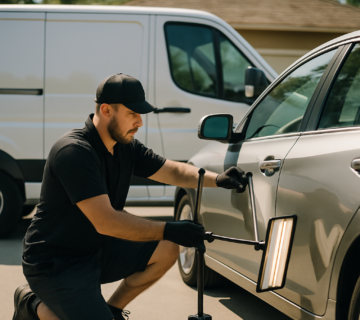
Even with perfect habits, parking lots produce dings. When one happens, the fix is fast and cheap if the paint is intact — usually $75–$125 and 30–60 minutes in your driveway. The mistake is leaving it: dings can collect, and a car with several is worth noticeably less at trade-in time. Don’t try to DIY it on painted metal — that’s how a $100 fix becomes a $400 one.
Frequently asked questions
Do door edge guards actually work?
Yes — they protect your door’s edge from chips and prevent your door from denting the car beside you. They’re one of the few genuinely effective, cheap prevention tools.
Where is the safest place to park to avoid dings?
An end-of-row or pull-through spot at the far, emptier end of the lot, ideally next to a cart corral or a single well-kept car rather than between two vehicles.
Will a car cover prevent door dings?
No. Covers protect against sun, dust, and light weather, not against doors swinging into your panel. They can even scratch paint if they flap in wind.
How much does it cost to fix a door ding?
$75–$125 for a typical single ding with intact paint. Full pricing here.
Already have a ding or two? Text a photo to (916) 585-2554 for a fast, honest quote — we come to you across 38 Sacramento-area cities.

)
[…] real options: (1) park farther from the storefront where lots are emptier, (2) install door edge guards on your own car so you’re not the one dinging other cars, (3) add door cup protectors — […]