
Search “how to remove a car dent” and you’ll find dozens of DIY tricks promising a free fix in five minutes. Some work on specific dents. Most either do nothing or actively damage your car — turning a cheap repair into an expensive one.
Here’s the honest breakdown from a shop that fixes the aftermath of DIY attempts every week.
The short version
- Plastic bumper dents from the inside: DIY can sometimes work (push from behind).
- Metal panel dents: DIY almost never works and frequently cracks paint.
- Anything with intact paint you care about: the risk/reward heavily favors professional paintless dent repair.
The popular DIY methods, rated honestly
Boiling water + push from behind — works on plastic, risky on metal
Pouring boiling water on a plastic bumper dent and pushing from behind can occasionally pop it back, because plastic is flexible and has shape memory. On a metal panel, boiling water does almost nothing to help the metal and the thermal shock can crack the clear coat. Verdict: maybe for plastic bumpers, never for metal.
Plunger — rarely works, never precise
A cup plunger can pull a shallow, round dent on a flat panel slightly outward, but it can’t reach the exact low point or control how far the metal moves. You usually end up with a partly-out dent that now also has a high spot. Verdict: not reliable.
Hair dryer + compressed air (the “cold pop”) — cracks clear coat
The theory: heat the panel, then spray it with an inverted compressed-air can so the rapid cooling “pops” the dent. Reality: works occasionally on plastic, and the extreme cold spray routinely cracks the clear coat on painted metal. We see this damage constantly. Verdict: high risk on any painted surface.
Dry ice — cracks paint
Same principle as the cold-pop, more extreme. Dry ice on painted metal cracks clear coat and color coat. Verdict: don’t.
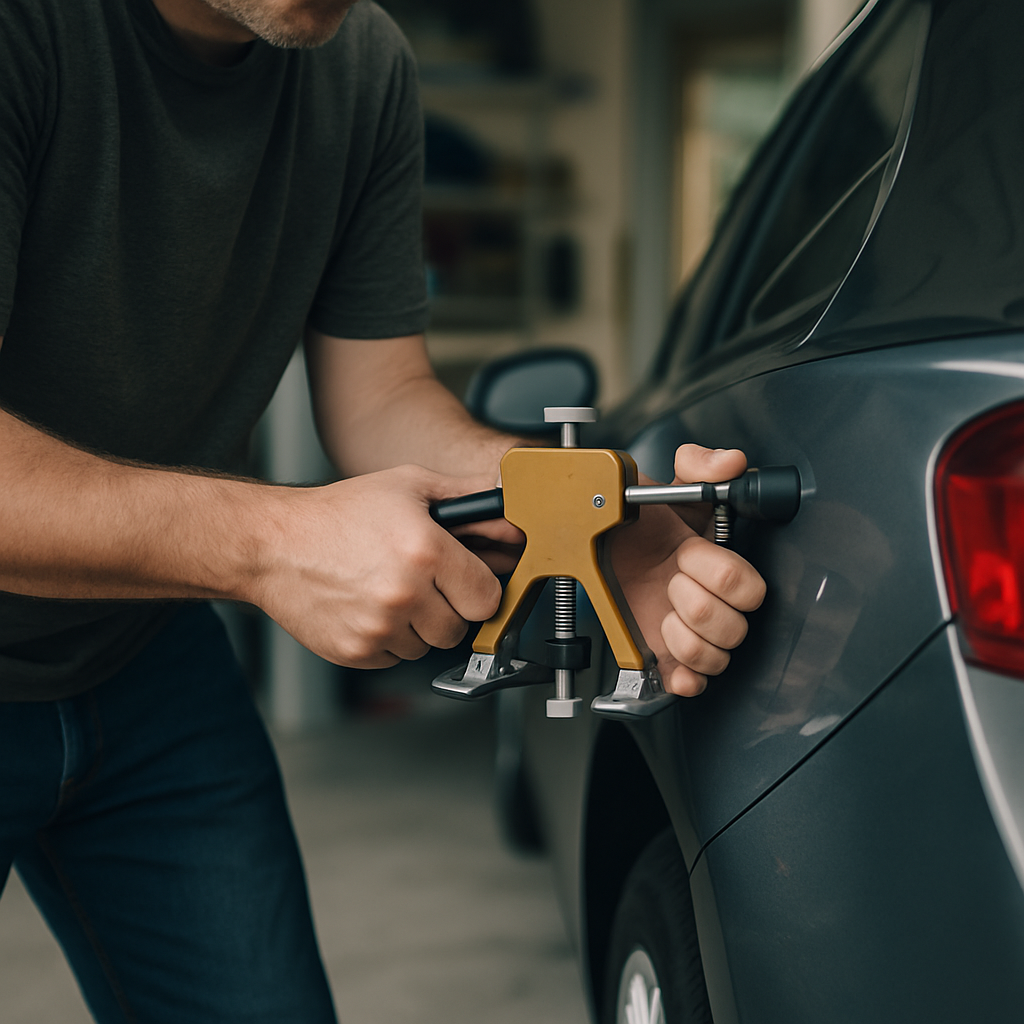
Suction cup / glue-pull kits from the auto store — leave high spots
These pull the dent outward from the surface, but without the precision to stop at exactly flush. The common result is an over-pulled “high spot” bump that’s harder to fix than the original dent. Glue residue can also lift paint. Verdict: the most common reason a $125 repair becomes a $400 one.
Wooden dowel + tapping — for the brave, mostly makes it worse
Tapping a dent from behind with a dowel and mallet sounds plausible but without reading the metal under proper lighting, you create a field of small high and low spots. Verdict: leave it to trained tools and eyes.
Why professionals get a different result
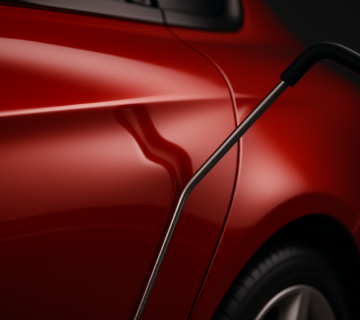
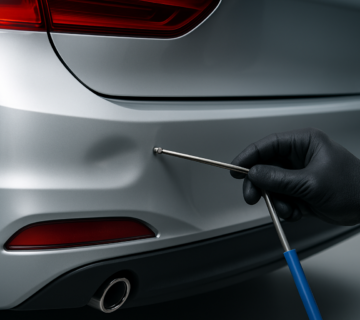
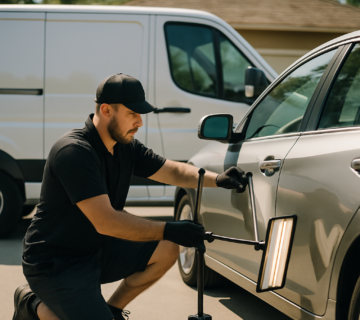
The difference isn’t the tools alone — it’s reading the metal under specialized lighting and applying precise, controlled force at the exact right point. A PDR tech watches the panel surface change under a reflection board and stops at exactly flush. DIY methods are blunt instruments with no feedback loop. Here’s how the real process works.
When DIY is actually fine
- A flexible plastic bumper dent you can reach from behind, on a car you don’t care about cosmetically
- A beater you’re about to sell for scrap
- You genuinely don’t mind if it looks worse afterward
When to skip DIY entirely
- The paint is intact and you want to keep it that way (DIY risks cracking it)
- The car is a lease (lease-return dent fees dwarf the repair cost)
- You plan to sell or trade it (a botched DIY repair lowers value more than the original dent — see how dents affect trade-in value)
- It’s a Tesla, F-150, or other aluminum panel (DIY on aluminum is almost guaranteed damage — see the aluminum guide)
The honest cost comparison
A professional door ding repair is $75–$125. A DIY attempt that cracks the paint turns it into a $400–$800 body shop repair. The expected-value math almost always favors getting a real quote first. Use our 5-question self-diagnostic to see if your dent is PDR-fixable before you try anything.
Frequently asked questions
Does boiling water really remove car dents?
Only on flexible plastic bumpers, and even then inconsistently. On metal panels it does nothing useful and can crack the clear coat.
Will a plunger pull out a car dent?
Sometimes partially, on a shallow flat-panel dent, but without precision — you often trade the dent for a high spot.
Can I damage my car trying DIY dent removal?
Yes — cracked clear coat, lifted paint, and high spots are the three most common DIY outcomes we repair. The fix afterward usually costs more than the original dent.
What’s the safest DIY option?
For a flexible plastic bumper you can access from behind, gentle hand pressure (no heat tricks) is the lowest-risk attempt. For painted metal, there isn’t a safe DIY option — the paint is the thing at risk.
Not sure if your dent is DIY-able or a pro job? Text a photo to (916) 585-2554 and we’ll tell you honestly — including when it’s small enough that you could leave it. Or get a quote online.

No comment