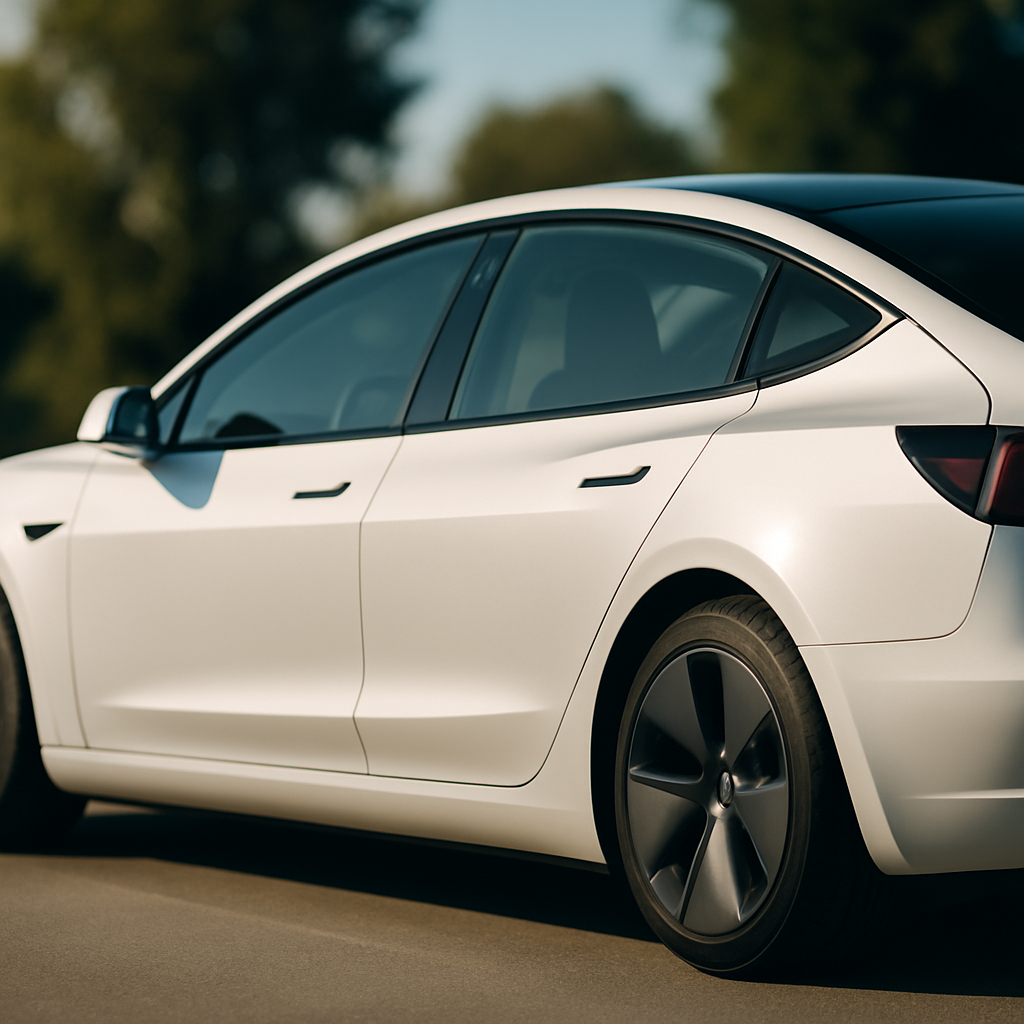
If you own a Tesla, late-model Ford F-150, Rivian, Lucid, or one of the increasingly common aluminum-paneled German cars, dent repair on your car is fundamentally different from repair on a steel-bodied vehicle. Wrong tools, wrong tech, wrong technique — and the panel is permanently damaged.
Here’s everything aluminum-vehicle owners need to know.
Quick reference: which vehicles have aluminum body panels?
- Tesla Model 3 — hood, doors, fenders are aluminum
- Tesla Model Y — doors, fenders, hood, hatch
- Tesla Model S — nearly all aluminum panels
- Tesla Model X — nearly all aluminum, including the doors
- Ford F-150 (2015 and newer) — full aluminum body, including the bed
- Ford F-250/F-350 Super Duty (2017+) — aluminum body
- Rivian R1T, R1S — significant aluminum content
- Lucid Air — mixed aluminum + composite
- BMW i-series, M-cars (varies by model year) — selective aluminum
- Audi A6/A8/Q7/Q8 — mixed aluminum + steel
- Range Rover, most modern Land Rovers — aluminum body
- Jaguar XF, XJ, F-Pace — aluminum
If you’re not sure whether your car is aluminum, check the manufacturer’s specs or ask the dealer. The information matters for any body work you might need.
Why aluminum is different from steel
Steel and aluminum behave fundamentally differently under tool pressure:
- Stiffness. Aluminum is roughly 30% stiffer than steel of the same thickness. The same push that moves a steel panel barely moves an aluminum one.
- Work-hardening. Aluminum gets harder every time you bend it. After 3–4 pushes, it’s significantly stiffer than it was at the start. This means each subsequent push needs more force, which can cause overshoot.
- Tearing. Aluminum tears more easily than steel under sharp tool pressure. A tool tip that works fine on steel can puncture aluminum.
- Memory. Aluminum has different “memory” characteristics — it tends to spring back differently than steel.
- Heat sensitivity. Aluminum becomes much more workable when warmed to around 200°F. Steel doesn’t need this.
The practical impact: a tech trained only on steel will either fail to remove the dent (not enough force) or damage the panel (too much force, wrong tool, overshoot leading to high spots and potential tears).
What aluminum PDR actually requires
Specialized tools
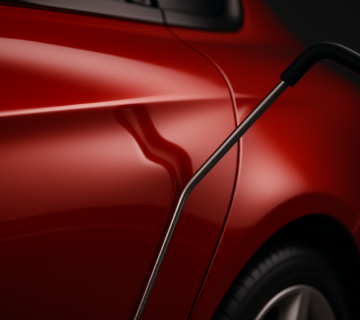
Aluminum-rated PDR tools have wider tip surface area to spread the pressure across more metal. A steel-rated tool has a sharper, more focused tip — great for steel, dangerous for aluminum.
Heat management
Before pushing, the tech warms the aluminum to roughly 180–220°F with a heat gun. This makes the metal more malleable and reduces work-hardening. Done wrong, you can scorch the paint or weaken the panel. Done right, it makes aluminum almost as workable as steel.
Patience
Aluminum work takes longer. An identical dent that takes 45 minutes on a steel door takes 60–90 minutes on a Tesla aluminum door. The technique is slower, the tool changes more frequent, the heating cycle adds time.
Aluminum-specific training and certification
The major PDR training programs (Vale, Dent Devils, etc.) offer aluminum-specific certifications that cover all the above. A real aluminum-certified PDR tech has gone through this training and can describe specifically what’s different about aluminum work.
Real Sacramento pricing for Tesla & aluminum PDR
Add roughly 25–40% to standard steel-panel pricing:
- Tesla door ding (small): $95–$150 (vs $75–$125 on steel)
- Tesla door dent (standard): $175–$325 (vs $125–$250 on steel)
- Tesla door crease: $325–$650 (vs $250–$500 on steel)
- F-150 bed dent (small): $150–$250
- F-150 hood dent: $250–$425
- Tesla hail damage: billed per panel, $125–$200 per panel typically. Insurance almost always covers.
- Model X falcon door dent: highest complexity due to door mechanism — quote per case.
For reference, body shop pricing on Tesla aluminum is roughly 3–5x these numbers — $1,800–$5,000+ for a single dent on a door panel. PDR is the dramatically better economic choice when it’s an option.
What happens when a non-certified tech works on aluminum
We see this regularly in our Sacramento shop — a Tesla owner brought their car to a cheap shop that “does aluminum” without actually being certified. Common results:
- Dent partially fixed with visible high spots. The tech didn’t have the right tools or didn’t manage heat properly. Now there’s a bump where there used to be a dent.
- Panel “fixed” but feels softer in that area. The work-hardening pattern is uneven — the metal is now weaker in the impact zone.
- Hairline cracks in the paint. Heat applied wrong cracked the clear coat.
- Tear or puncture from a wrong-tool push. Panel now needs replacement at thousands of dollars.
Once an aluminum panel has been worked badly, recovering it usually requires a body shop — and on a Tesla, that means replacing the panel (Tesla doesn’t sell most body panels separately, and replacement at a Tesla-approved body shop runs $3,000–$8,000 per panel).
What Tesla owners specifically should know
Tesla’s official position on aluminum repair
Tesla maintains a list of Tesla-approved body shops for collision and structural work. For minor cosmetic dents that don’t break paint, Tesla generally allows independent PDR repair as long as the tech is aluminum-certified. Tesla service centers themselves do not do PDR — they refer customers to outside specialists.
Tesla warranty
Cosmetic PDR repair (no paint work) does not void any Tesla warranty. Body shop repaint may affect appearance warranties on the painted surface.
Tesla resale value preservation
Tesla resale value is highly sensitive to paint history. A Tesla with documented body shop work loses 5–10% more value than the same Tesla with PDR-only repair. PDR preserves the factory paint stamp, which keeps the car eligible for premium private-party and CPO resale.
Common Tesla dent locations
- Charging port flap: bumped by other drivers at Superchargers. Very small but precise PDR work.
- Rear door (Model 3/Y): common door-ding location, soft aluminum makes it more vulnerable than steel.
- Hood near the front emblem: hail damage and rock dings.
- Side mirror housings: not PDR-able but commonly damaged. These are replacement parts.
- Frunk lid (Model 3): hail damage location.
What F-150 owners should know
The 2015+ F-150 has an aluminum body and aluminum bed. The bed in particular is vulnerable — throwing tools in the bed, sliding heavy items, hauling cargo all leave dents. We see F-150 bed dent work every week.
Aluminum bed PDR has its own challenges:
- The bed is double-walled — access from behind requires removing inner bed panels
- The aluminum is thinner in the bed area, more sensitive to overshoot
- Bed dents often come with paint scratches (cargo dragging) — combo PDR + touch-up
F-150 owners doing fleet work or construction should consider a fleet account with us — volume PDR pricing on bed dents and door dents adds up.
Insurance and aluminum hail damage
If your Tesla, F-150, or aluminum vehicle was hit by hail, the same playbook as steel cars applies — with one important difference. Insurance carriers know aluminum body shop repair is dramatically more expensive than PDR. Most carriers strongly prefer (and may require) PDR when it’s possible.
Before accepting a body shop hail estimate on an aluminum vehicle, always get a PDR second opinion. We’ve saved Sacramento Tesla owners from $5,000+ in body shop charges by handling the same damage with PDR for under $2,000. See our hail insurance claim guide and hail devaluation breakdown.
How to find aluminum-certified PDR in Sacramento
Three questions that screen 95% of bad shops:
- “Are you aluminum-certified, and through what training program?”
- “What’s different about your approach to a Tesla panel vs a Honda panel?”
- “Have you done at least 50 Tesla/F-150 jobs?”
A certified shop answers all three confidently with specifics. An uncertified shop hedges or gives generic answers.
We’re aluminum-certified, have done hundreds of Tesla/F-150 jobs in Sacramento, and explain the exact technique difference we use on aluminum. See our Tesla & aluminum specialist page.
Frequently asked questions
Can paintless dent repair work on a Tesla?
Yes — with an aluminum-certified tech using specialized tools and heat-controlled technique. Without certification, attempts will damage the panel.
Will Tesla void my warranty if I get PDR work done?
No. Cosmetic PDR that doesn’t involve paint work doesn’t affect Tesla warranty coverage. Tesla service centers themselves don’t do PDR — they refer customers to certified independents.
How much does it cost to fix a Tesla door ding?
$95–$150 for a single small door ding on Model 3 or Y. Add 25–40% to standard PDR pricing.
Can you do PDR on F-150 aluminum beds?
Yes. F-150 bed dent PDR is some of our most common aluminum work in Sacramento. Bed-specific PDR access from inside the bed makes this very effective.
Should I use Tesla’s recommended body shops?
For collision and structural work, yes. For cosmetic dent repair with intact paint, an aluminum-certified PDR specialist is faster, cheaper, and preserves your factory paint better.
How long does Tesla PDR take?
60–90 minutes for a typical door ding. 2–4 hours for a larger dent or hail panel. Aluminum work takes about 50% longer than equivalent steel work due to heat-management cycles.
Glass Reflection Dent Repair — Sacramento’s aluminum-certified PDR specialist since 2012. (916) 585-2554. Text a photo of your Tesla or F-150 dent and we’ll send a real quote within an hour. We come to you across 38 cities in the Sacramento metro.
)
[…] unlike what modern exotic metals demand — the same careful, paint-safe approach we use for Tesla and aluminum panels, just applied to the other end of the […]